
From Minefields to Opportunity
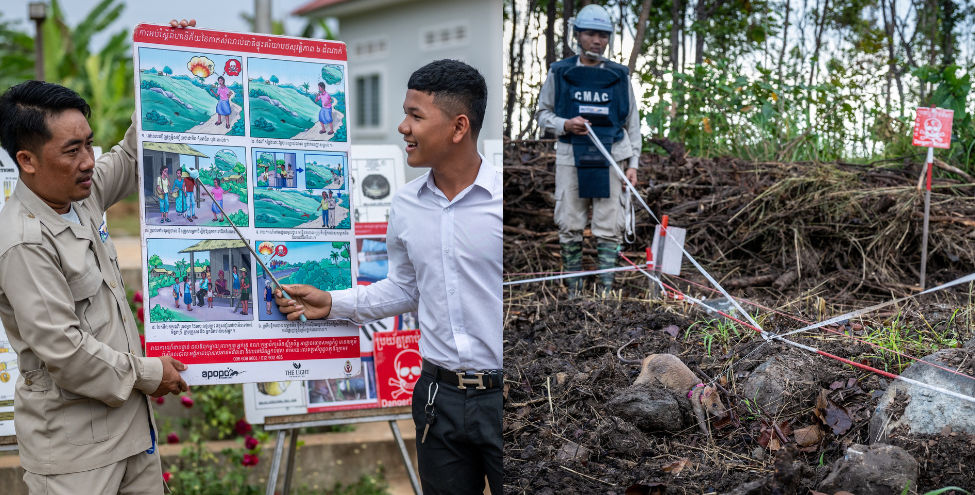
Cambodia still has a lethal legacy of decades of war, with landmines and explosive ordnances posing a risk to children and adults alike, particularly in rural areas. GDG has partnered with APOPO on their innovative landmine-clearing project J932N Landmine Clearing HeroRATs for nearly 10 years, where trained African giant pouched rats detect landmines and other explosives far quicker than any other clearing method. Technical survey dogs also release large areas of land ahead of clearance where there is no evidence of landmines.
Through this unique approach APOPO and its Cambodian partners saw 12,782,550 m² land released through clearance and technical survey activity in 2025, with 667 explosive ordinances found and destroyed. Only after the required clearance, quality control, and formal verification processes were completed was the land released for safe use. Much of it was returned to farming families, restoring access to agricultural land, livelihoods and safer communities.
APOPO’s story paints a picture of the strength in good partnership. Starting with small operations in Cambodia in 2014, APOPO quickly partnered with national clearance operator CMAC and works together to tackle the 1,000km² of mine-contaminated land remaining across the country. GDG’s partnership with APOPO began soon after this, creating opportunity for more donors to participate in this vital work. Through the power of partnership this project has contributed to the release of over 40 million m² of land since the project started, transforming the lives of thousands across the country, restoring safety and opportunity to communities who previously lived in fear.
Helping communities stay safe
Land clearance is only one part of the response. Children, particularly those living in rural areas, can be especially vulnerable to landmines and unexploded ordnance because they may not recognise the dangers of playing in mine-affected areas.
To help reduce this risk, the project delivers Mine Risk Education in schools near minefields. Teams use informative posters and brochures to teach children and adults how to recognise explosive hazards, report them and behave safely in areas where contamination may remain.
What happens after the land is cleared?
Removing landmines does more than make an area safe. It can return productive land to families and create opportunities to strengthen livelihoods.
In recent years, APOPO has introduced technical agricultural training in participating communities, providing high-quality seeds and helping farmers develop skills to improve production and sustainability. Participant families have seen their average income increase by 67%.
For 2024 participant Kim Sokken, the difference has been significant:
“For my family, the changes have been life-changing. With the increased income, I was able to buy 10 more hectares of land and finish building our house… The most significant relief is that since APOPO and CMAC came, I haven’t encountered any landmines or unexploded ordnance. That peace of mind is invaluable… I feel more optimistic about the future.”